
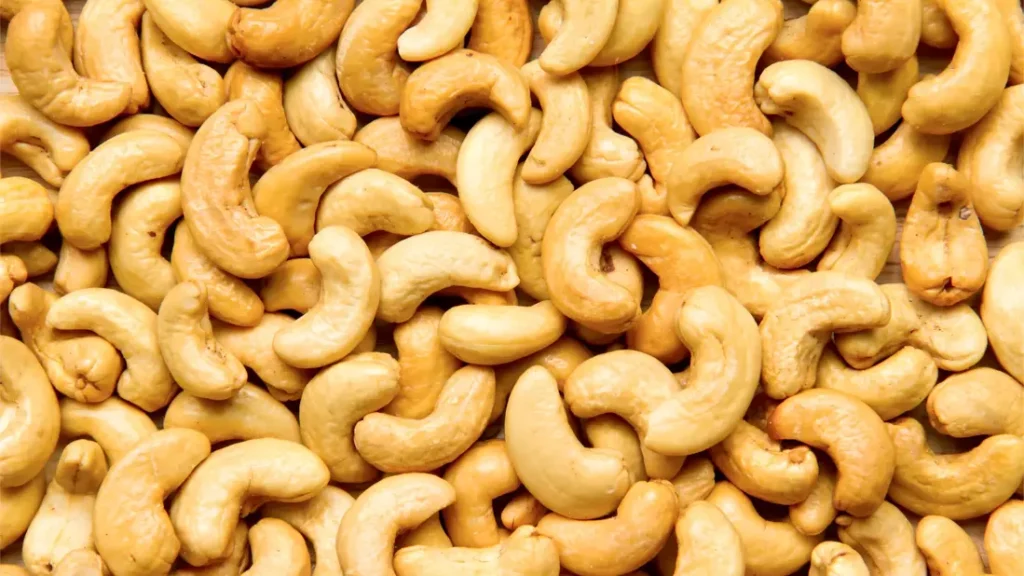
The cashew is a highly valued, kidney-shaped culinary nut (though botanically a seed) known for its distinctive buttery flavor and soft, crunchy texture. Originating in Brazil, it was spread globally by Portuguese explorers in the 16th century, primarily to India and parts of Africa, which are now leading producers. Cashews have a unique growth structure: the nut is encased in a hard, toxic shell at the bottom of the fleshy, pear-shaped cashew apple (which is an accessory fruit). Due to the shell containing the highly irritating phenolic resin anacardic acid (related to the compound in poison ivy), cashews are always sold shelled and must be carefully steamed or roasted after harvest to safely remove the shell and neutralize the oil before they are ready for consumption. Nutritionally, cashews are rich in heart-healthy monounsaturated fats, magnesium, and copper, offering benefits for cardiovascular health, bone strength, and blood sugar regulation.